Greenland-Linked Tariff Threats: What Multinationals Should Know
Date18 février 2026
Type
Articles
Executive summary
On January 17, 2026, U.S. President Donald Trump announced new tariffs on eight European countries, explicitly linking the measures to U.S. demands for the purchase of Greenland. European governments and institutions have quickly responded with unusual unity, rejecting negotiations under tariff pressure and signaling readiness to retaliate if the measures are implemented. The European Union (EU) has convened emergency consultations and is weighing the use of its anti-coercion trade instrument. Other U.S. allies, including Canada and the United Kingdom (UK), have publicly expressed concern about the broader implications for alliance stability.
Whether or not the tariffs are ultimately imposed, the episode has heightened geopolitical tension within NATO and increased policy uncertainty for companies with transatlantic exposure. For multinational corporations and organizations, the principal risk lies less in the immediate tariff rate and more in the widening scope of potential retaliation, the politicization of trade tools, and the likelihood of prolonged uncertainty.
What is happening
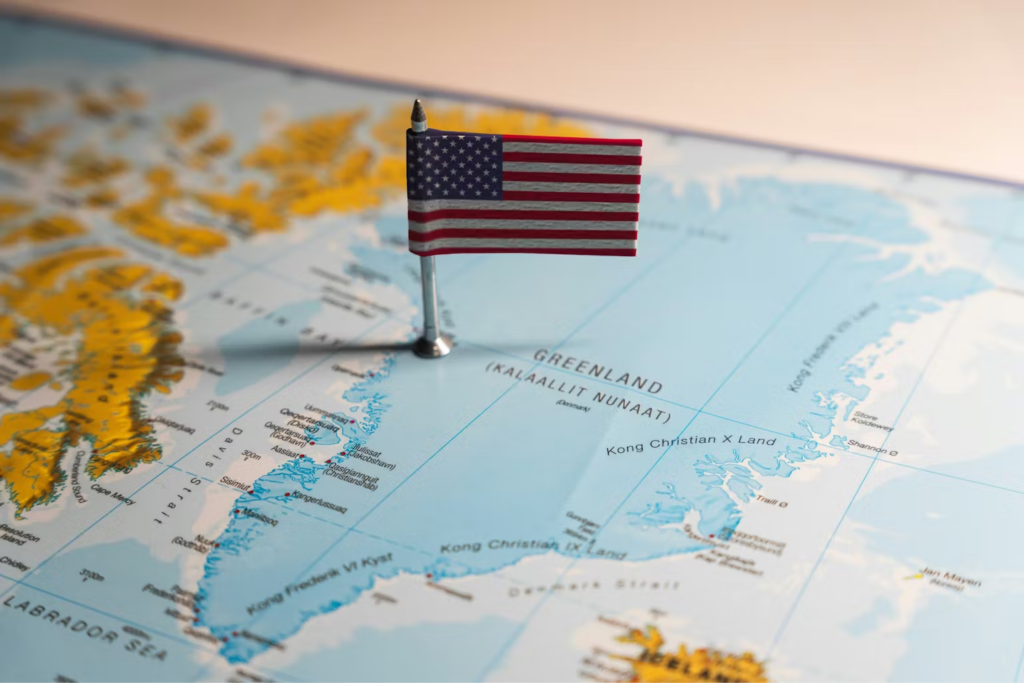
The Trump Administration has announced an intended 10 percent tariff on all goods imported from Denmark, Norway, Sweden, France, Germany, the UK, the Netherlands, and Finland to be enacted on February 1, with a stated escalation to 25 percent by June, tied to progress on Greenland-related negotiations.
The tariffs have been explicitly linked by the White House to European opposition to U.S. plans regarding Greenland, following recent European military deployments to the island that Washington has characterized as obstructive.
The Trump Administration is framing Greenland as a core national security priority connected to broader U.S. defense objectives, signaling limited flexibility for interim arrangements.
European governments have responded with coordinated diplomatic statements rejecting negotiations under tariff pressure and affirming that Greenland’s status is a matter for Greenland and Denmark.
The EU is considering potential countermeasures, including use of its anti-coercion trade instrument, which could extend beyond goods to services and market access, subject to proportionality requirements that limit retaliation to the level of demonstrated injury.
European leaders have also indicated that ratification of the pending U.S.–EU trade agreement is unlikely to proceed while the dispute remains unresolved.
Potential cascading effects
Expanded retaliation risk: European discussions are focused on services, technology, and market access, raising exposure for U.S. and multinational firms beyond traditional goods-based tariffs.
Trade agreement fragility: Existing and pending trade deals may be treated as provisional, with companies less able to rely on negotiated tariff ceilings or stability commitments.
Operational complexity: The EU’s single market structure complicates selective tariff application, increasing compliance and routing challenges for global supply chains.
Global precedent: Other governments may adopt similar approaches, increasing the likelihood that trade tools are used in future disputes unrelated to trade policy itself.
What companies should be doing now
Map exposure across goods and services: Assess exposure not only to goods tariffs, but also to European services markets, digital operations, data flows, and regulatory dependencies that could be affected by retaliatory measures.
Plan for prolonged uncertainty: Develop scenarios that account for delayed implementation, partial application, or legal constraints, alongside continued political escalation.
Engage early with stakeholders: Smart engagement with U.S., EU, and national authorities, as well as industry groups, can help clarify likely pathways and potential exemptions.
Monitor key decision points: Watch closely for the U.S. Supreme Court ruling on tariff authority (which could happen at early as January 20), President Trump’s arrival in Davos on January 21 accompanied by a larger-than-usual contingent of his Cabinet and senior White
House aides, EU decisions regarding the anti-coercion instrument, and signals around selective or symbolic enforcement.
DGA perspective
This situation is best understood as a high-pressure negotiating tactic rather than a settled policy outcome. The structure and sequencing of the tariff threat are consistent with the Trump Administration’s past approach of using maximum economic leverage to force counterparties to the negotiating table, often before legal, administrative, or diplomatic pathways are fully defined.
At the same time, the scale and target of the threat are notable. Applying trade pressure against multiple NATO allies over a territorial and security issue has prompted a faster and more unified European response than in previous disputes, increasing the risk of miscalculation and retaliation even if the original objective is leverage rather than implementation.
For companies, the key takeaway is not to assume either that the tariffs will be fully enacted or that they will quietly disappear. The more likely near-term scenario is a period of sustained signaling, legal uncertainty, and tactical escalation as positions are tested. Companies should plan accordingly, maintaining flexibility while monitoring whether this pressure campaign evolves into formal negotiations or triggers countermeasures that affect commercial operations.